November 22nd, 2025
Outcomes of COP30
Conference of the Parties to the UNFCCC (COP30)
After two weeks of intense work, COP30 ended with mixed results and the adoption of the Belém Policy Package. The IONR welcomes the progress made on Article 6.8 of the Paris Agreement and the creation of the Tropical Forest Forever Facility. In a historic moment, alongside the Alderville First Nation, we announced the legal recognition of Lake Pemadeshkodeyong/Rice Lake, an essential step for the rights of Nature in Ontario, in the spirit of "Mutirão".
See presse release above.
November 18th, 2025
Event, Belém, Brazil
Granting Rights to Nature: a solution for climate action
November 17th, 2025
Event - Belém, Brazil
The rights of Nature : Educate, Protect and Take action for the climate
November 2025
Belém, Brazil
Conference of the Parties to the UNFCCC (COP30)
"Brazil will host and preside over the 30th session of the Conference of the Parties (COP30) to the United Nations Framework Convention on Climate Change (UNFCCC) in November 2025 against the backdrop of several landmarks: COP30 will mark 20 years since the entry into force of the Kyoto Protocol and 10 years of adoption of the Paris Agreement. (...) Now is the time we leave behind inertia, individualism, and irresponsibility to embrace the best versions of ourselves through creativity, solidarity, and perseverance." Letter from the President Designate of COP30/CMP20/CMA7_10 March 2025
November 22nd 2024
Outcomes of COP29
Conference of the Parties to the UNFCCC (COP29)
At COP 29, a work programme on non-market approaches to the Paris Agreement was adopted, emphasising the importance of ‘Earth-centred actions’. This programme, supported by Bolivia, recognises the importance of eco-centric perspectives in combating climate change and biodiversity loss. The IISD will monitor the progress of these actions and their integration into the financing programme.
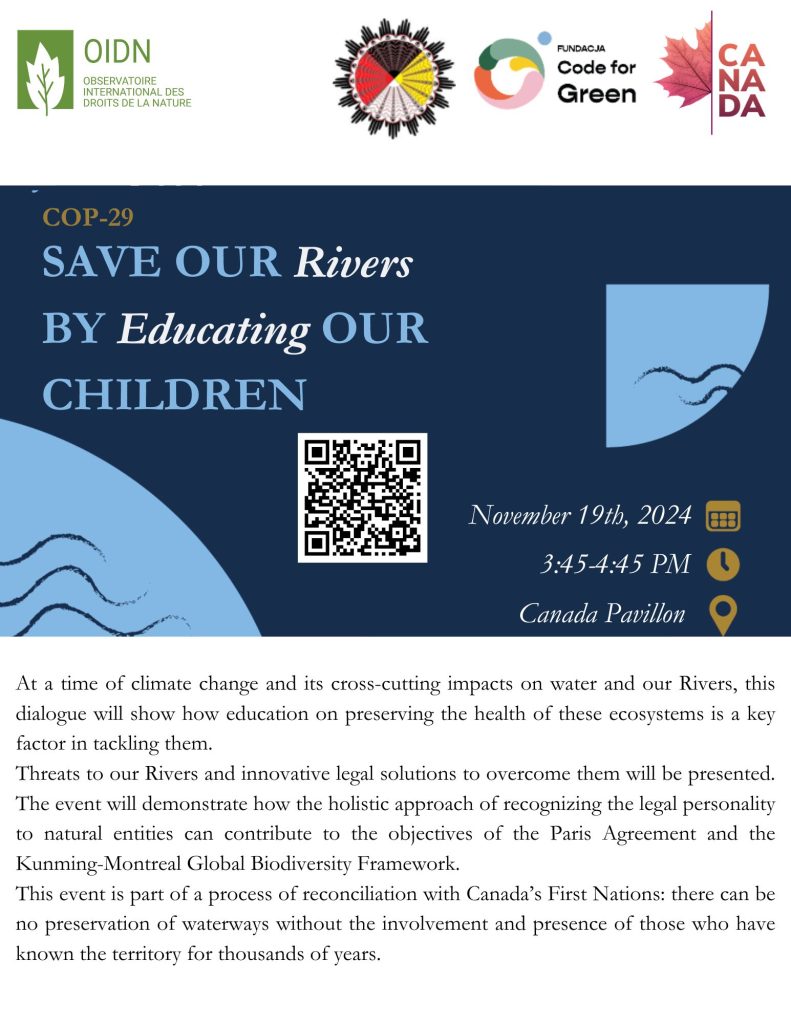
November 19th 2024
Event - Baku, Azerbaijan
Saving rivers, the education of our children
November 11th 2024
Baku, Azerbaijan
Conference of the Parties to the UNFCCC (COP29)
COP29 must be an enabling COP, delivering concrete results to translate the commitments made under last year's historic United Arab Emirates consensus into tangible outcomes, in the real world and the real economy." - UNFCCC
Conference of the Parties to the UNFCCC (COP28)
For the first time, Mother Earth is mentioned in the provisions regarding non-market approaches promoted under the Paris Agreement.